Biggest gay dating website Liuzhou China
Contents:
The strategy aimed to decrease the number of new infections by a targeting disease surveillance to enable evidence-based public health programming and decision-making, b linking PLWH to prevention support services to prevent secondary transmission, and c improving access to, and quality of, care and treatment services.
Specifically, GAP supported the establishment or strengthening of national or provincial sentinel surveillance sites in 15 provinces and further ensured that these sites were actively providing linkages for those individuals who were found to have HIV infection. As a result, the number of sentinel surveillance sites increased sixfold during the period from to , and 18, PLWH received diagnoses at these sites. This activity increased the coverage and quality of surveillance information available for decision-making, while also increasing local capacity for developing referral systems, care linkages, and case management capacity Wang et al.
Over the subsequent years, these surveillance sites have been transitioned to local public health authorities and continue to function as an important tool for both local and national public health decision-making. As the numbers of PLWH increased, there was a compelling public health need to establish a systematic approach that linked these individuals to appropriate follow-up testing and care and the prevention of secondary transmission. Again, the national program called for implementation of a public health approach based on increased rates of case finding, epidemiological investigation, CD4 testing, and follow-up services.
As part of the China-US collaboration, pilot programs were established in Yunnan and Guangxi to increase the proportion of individuals who knew their status and increase the number of PLWH who completed at least two linked follow-up visits for care and support. Since , these measures have served as national core indicators for all provinces, with similar improvements over time—a key contributor to program success at the national level see Chap.
As systematic public health efforts to identify PLWH and link them to appropriate services intensified, certain gaps within the clinical care systems also emerged. Particularly in the rural areas hardest hit by the iatrogenic, plasma donation-related epidemic of the s, it became apparent that the healthcare providers did not have adequate training or clinical mentoring to provide quality HIV care and treatment to increasing numbers of patients on ART.
Its mission was to provide in-service AIDS clinical training to rural clinicians selected from local Anhui and other high epidemic provinces in China. This approach proved extremely successful. The model was replicated in two additional provinces in the later years of the GAP collaboration, and in , leadership for the training center in Anhui was transitioned to the provincial government see Chap.
GAP also introduced state-of-the-art surveillance methodology to increase case finding. Through these pilots, stakeholders developed a better understanding of field implementation methods, which proved invaluable in the national adoption of RDS. This sampling method was introduced internationally and had never been applied in China see Chap.
GAP helped to demonstrate that with conservative cost estimates, integrated nationwide HIV and syphilis testing of pregnant women in prenatal care in China was substantially more cost-effective than HIV screening alone Owusu-Edusei et al. Comprehensive, integrated PMTCT efforts were highly effective in reducing mother-to-child HIV transmission to very low levels whether in rural or urban settings Shan et al.
It was shown to be an effective model that was expanded first to the entirety of Guangxi where the approach continues to deliver results. From to , 12 out of infants born to HIV-infected women tested HIV-positive, for a transmission rate of 3. While the GAP remained closely integrated with the national response, the flexibility of the international cooperation model also allowed for some experimentation, and as a result, a number of innovative approaches were tested within the specific Chinese context.
In , there were 1. To slow the dual epidemics of HIV and drug use, a methadone maintenance treatment MMT program was piloted in with eight clinics in five provinces serving approximately clients Lu et al. By the end of , the National MMT Program was comprised of clinics serving more than , clients cumulatively Li et al. However, China faced a challenge in delivering methadone to PWID living in the rural and often remote border areas where the drug trade flourished.
In an innovative effort to address this challenge, in , GAP supported the establishment of the first mobile MMT clinic in China in Dehong prefecture, Yunnan province, an area with high HIV prevalence and incidence at the border with Myanmar Duan et al. Since , this expanded network has been providing services to roughly , heroin users each year Wu and Pisani see Chap. As the collaboration strengthened and deepened, it also adapted to respond to the evolving characteristics of the HIV epidemic in China and the needs of the national program.
With a strong national surveillance system in place to guide program and policy decisions, the concentration of the epidemic among key populations became very apparent. While injecting drug use remained a key factor in HIV transmission, by , sexual transmission had become the primary mode of HIV transmission Wang et al.
This necessitated new approaches to reach additional at-risk populations—not only PWID but also commercial male and female sex workers and their clients and MSM. As these groups are often vulnerable and stigmatized, interventions to address their public health needs must be carefully considered. GAP led the way in developing evidence-based approaches to these challenging issues.
The rapid scale-up of MMT has benefited thousands of drug users with decreased drug use and criminality, increased quality of life, and higher rates of employment Li et al. However, one of the main challenges in the early years was the very high dropout rate. A relatively low dosage of methadone may have been a key reason behind this average dose was only 48 mg in , as well as low training coverage and high turnover among MMT providers.
Although it has been shown in other settings that higher methadone doses can lead to higher retention and other favorable MMT outcomes, it is often not practiced in the field. The purpose of this study was to evaluate the impact of an intensive healthcare provider training program combined with expanded services targeting improving treatment retention, methadone dosing, and heroin use. The study aimed to determine reasons behind current dosing practices as well as reasons clients remain in and drop out of MMT. The study also aimed to evaluate the effectiveness of a tailored education program for MMT service providers via measurement of methadone dose levels prescribed to new patients.
The effects of methadone dose, with and without the inclusion of additional psychosocial services, were measured as MMT retention and illicit opioid use. This study consisted of a qualitative, formative assessment followed by a three-arm cluster-randomized controlled trial. The qualitative study using key informant interviews was conducted on a sample of MMT clinic staff, clients, family members of clients, and opiate dependent persons in the community during At the end of , the randomized community intervention trial was officially launched, and the first round of training was completed in three provinces.
The trial was conducted in 54 MMT clinics, which were randomized into one of three study arms: arm 1 is control group standard of care ; arm 2 gives intensive healthcare provider training on prescribing methadone dosage; arm 3 gives intensive healthcare provider training on prescribing methadone dosage, plus onsite psychosocial counseling services and enhanced peer support to clients.
The study has been enrolling patients in Guangdong, Guangxi, and Guizhou provinces for several years, and month follow-up of all participants has been completed in Findings from the trial have been used by the national MMT program to seek further service delivery improvements, and the findings will be published soon in the peer-reviewed literature. Lessons learned during the implementation of this study include the critical importance of implementation science in program quality improvement as well as the crucial role that training programs play in MMT clinic service quality and client outcomes improvement see Chaps.
Although commercial sex work is illegal in China, there are an enormous number of FSW working in China with estimates ranging from two to ten million Flannery ; Lu et al.
BMC Public Health. On June 2, noting that Jian's condition had become "extremely poor," Jiang Huifang again transferred him to the Medical Ward. The leadership of the new investigation should be entirely independent of both the Shanghai municipal government and the Ministry of Civil Affairs. It tracks preferences through clicks and messaging to help match you with people who are suitable and save users scrolling through endless profiles. De-identified data showed that MSM migration from southwestern China, which has the highest HIV prevalence in this population, to coastal cities with lower prevalence has implications for the spread of the HIV epidemic as well as the need for HIV care services Mi et al. Zhang, the "chafed, red and swollen" knee-joints were the result of staff having beaten them with a wooden stick to prevent Jian from struggling while he was tied down. We're using cookies to improve your experience.
Commercial sex work remains highly stigmatized in China and differs from other Asian countries. Fewer sex workers work in brothels, and as a result, epidemiologic studies are harder to conduct, and therefore, data about their health experiences remain relatively sparse. Because of the potential impact of this relatively hidden population, the GAP conducted intervention activities such as advocacy, training, peer education, and promotion of condoms.
The program also provided test results notification and counseling, as well as follow-up and referral services. These pilot interventions provided information on the local epidemic and scientific evidence for further intervention strategies.
In , the Internet Society of China, an industry regulatory body, listed homosexuality as sexual perversion in a notice for websites to “self-. Blued is currently the largest gay social network app in the world. Launched in , the free In , when his superiors discovered the website, Geng Le lost his family and job. Today, Blued employs over staff at its headquarters in Beijing, China, "Gay dating apps Hornet and Blued enter global partnership".
Studies have shown that low-tier FSW i. With GAP financial and technical support, a survey was conducted in in five cities in Guangdong, Guizhou, and Shandong provinces and completed by the end of The primary objective of the survey was to better understand risk perceptions and behaviors of low- to medium-fee FSW in China as well as seroprevalence rates of HIV, syphilis, and herpes simplex virus type 2 HSV-2 in this population.
A total of eligible low-fee and medium-fee FSW were recruited in the study. Tailored interventions targeting low-fee FSW, in particular, that incorporate prevailing condom use negotiation challenges are urgently needed. The potential for prevention methods alternative to male condoms has received greater attention in recent years including pre-exposure prophylaxis PrEP , post-exposure prophylaxis PEP , and female condoms.
Gaining knowledge on awareness and acceptability of these prevention methods among high-risk FSW in China will help inform the potential implementation of these prevention methods in China see Chaps.
Navigation menu
The GAP mobilized to support this national effort. A number of the innovative approaches initially piloted with the support from GAP have become models for scale-up at the local, provincial, or national levels. GAP recognized the critical role that communities and opinion leaders play in engaging with this vulnerable population and therefore supported a popular opinion leader POL intervention model.
This model first started as a pilot program in Mianyang, Sichuan province, and expanded to Guizhou province.
Gay Dating – Professional Men Seeking Men with EliteSingles
This pilot was selected by China in as a model for best practices. Working with MSM couples is a new challenge for counselors and requires different skills and approaches than traditional couples counseling. To ensure that counselors had these needed skills, GAP sponsored a training workshop, which was held in Chengdu, and collaborated on the development of a couples testing and counseling manual specifically for MSM.
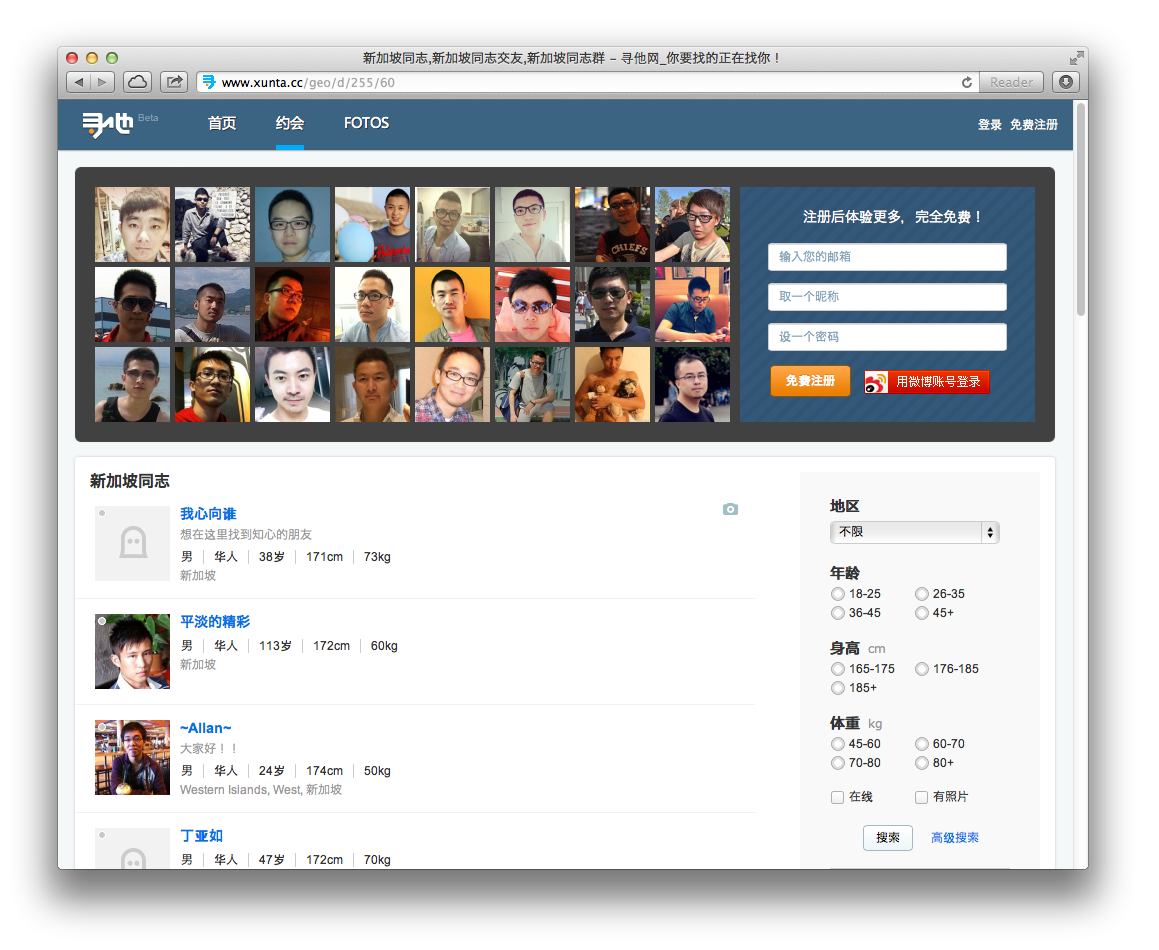
The results of a pilot showed that the new model was well accepted by MSM. The model was then replicated in Xinjiang and Beijing and then expanded further to other provinces. In addition, GAP collaborated with the largest gay male dating website in China www. De-identified data showed that MSM migration from southwestern China, which has the highest HIV prevalence in this population, to coastal cities with lower prevalence has implications for the spread of the HIV epidemic as well as the need for HIV care services Mi et al.
These early efforts have paved the way for greater and deeper collaboration between the USA and China in order to reduce rates of HIV among MSM—a continuing challenge for both countries and for many other countries see Chap. GAP also helped NCAIDS to conduct community advocacy, VCT, outreach, intervention, and advocacy events; explore care models that involved community-based organizations CBOs and nongovernmental organizations NGOs ; improve the case management system; support pilots to increase adherence and improve and expand treatment quality and coverage; improve coinfection treatment and management; and actively promote ART based in MMT settings.
In addition, pilot programs on community-based care service to improve treatment adherence, treatment service quality, treatment coverage, and coinfection treatment and management according to local situations were supported. This completed the computerization of medical records and data reporting systems in all ART treatment sites, which greatly improved data quality and data reporting efficiency. Management and coordination of ART treatment at central and peripheral levels were also enhanced.
- The US CDC Global AIDS Program in China | SpringerLink?
- Liuzhou girls.
- what does Aguascalientes Mexico gay escort charge?
- The best queer dating apps, since meeting people in real life is hell.
Annual national data quality checks have been conducted beginning in In , US CDC experts collaborated with NCAIDS experts to analyze and evaluate overall antiretroviral drug resistance data, reported resistance sequencing quality, and reliability of resistance test results from national and provincial drug resistance laboratories. In addition, the level of ARV drug resistance in the Chinese population was analyzed, and development of a report on resistance was discussed. Therefore, in , GAP established a second rural clinical training center in Luzhai county, Guangxi, an area with a significant heterosexual and drug use-driven HIV epidemic.
This hard-hit area had a primarily injecting drug use-driven HIV epidemic among the Yi ethnic minority group. The training facility in Zhaojue funded by GAP provided ongoing mentoring to 20 local clinicians and helped treat over additional PLWH from the Yi community between and Dual referral systems were established between county- and township-level health facilities at the Lixin and Luzhai county health systems, as part of the training activities. All rural clinical training centers have been transferred to the local health authority. This has been a very productive area for collaboration, especially in the period from to In addition, GAP supported the development of a training manual for early infant diagnosis EID technology and an HIV incidence testing protocol for use in 15 provinces.
In addition, GAP strengthened the capacity of NHRL through digitization and proficiency testing of an electronic report management system v1. Overall, the number of laboratories that participate in PT programs increased from 57 to In addition, the program assisted NHRL to annually monitor the quality of domestic and international HIV testing reagents available in the Chinese commercial market in order to assure national testing quality.
Finally, and perhaps most significantly, GAP assisted NHRL to improve management and to obtain the highest international laboratory accreditation offered by the American Society of Pathologists in GAP provided support that built capacity below the national level as well, by supporting trainings and workshops to strengthen the capacity of local laboratory staff, including national training courses on PT and the electronic reporting and management system; national training courses and workshops on HIV-1 incident infection detection, surveillance, and data analysis; conferences on the PT program; a workshop on alternative HIV testing algorithm; a conference on laboratory HCV testing and quality assurance; and a conference on HCV testing reagent evaluation.
- single gay dating Sheffield Uniked Kingdom.
- online gay dating in Bujumbura Burundi;
- where to connect with gay guys in Pucheon South Korea?
- massage escort gay Sarajevo Bosnia;
Virtually all of the 15 GAP-supported provinces received some support and only a few examples are provided here. With GAP support, Anhui held technical training for laboratory personnel, organized QC activities, strengthened supervision and inspection of the laboratory, and established a set of reasonable quality assessments for the HIV testing laboratory system. Every year, the province trained laboratory personnel and assessed HIV laboratories.

The project accelerated laboratory establishment and standardization of work. Technical skills for performing screening tests and HIV diagnosis technologies advanced dramatically through years of persistent training and evaluation. HIV infection was diagnosed in a timely manner, case finding was accurate, and prevention strategies were well developed. In Heilongjiang, at the end of , a laboratory detection network was established. The network was composed of one confirmation central laboratory, four confirmation laboratories, nine HIV screening central laboratories, HIV screening laboratories, and detection points.
This ensured the network laboratory QC was standardized in the entire province. The work done in collaboration with China has the potential to significantly and positively contribute to the global response to HIV—not only to the Chinese national response. Some of the areas where collaboration was initiated with this goal in mind include evaluation of new point-of-care POC CD4 analyzers Liang et al. Some of the pilots and models that the program successfully implemented have been promoted and replicated nationwide.
Luzhai county population , is comprised of four towns and five villages and is located in the central northern region of Guangxi.
Sex girls in liuzhou
There are five county health facilities, ten township village health clinics, and four screening test laboratories i. All medical facilities in the county are capable of delivering related HIV counseling and rapid testing. The first HIV-infected patient in Luzhai county was reported in Overall adult HIV prevalence in the county was close to 1.
Objectives were to simplify routine HIV testing in the clinical setting, find more HIV cases as early as possible, and link PLWH to prevention, treatment, and care services to prevent secondary sexual transmission.