Dating gay with hiv Bochum Germany
Contents:
Skip to main content Skip to table of contents. Advertisement Hide. This service is more advanced with JavaScript available. Front Matter Pages i-xv. Chronology — Pages The importance of these questions concerns the ability of feminists who are, for instance, also sex workers, trans women, working-class women, Muslim women, or practitioners of BDSM to challenge and rework feminist critiques that have constructed them as problems or objects requiring intervention.
HiV positive Gay dating/Marriage
This theatrical production brought together academics from different disciplines with a group of young people from London to explore ideas of happiness and well-being. The research attends to what happened in the devising of the theatrical production when academic understandings from different disciplines came together with stories of personal experiences of happiness: how do these understandings and experiences articulate; are there forms of authority that privilege some understandings and some experiences over others?
This project — a collaboration with Dawn Rose Lucerne University of Applied Sciences and Arts, Switzerland — explores historically-specific ontological assumptions about happiness and well-being. The knowledge generated by this study will contribute to debates about the articulation of culture, technique and neurophysiology in the production of subjectivity and affect — and the political and ethical implications thereof. She is particularly interested in exploring how young people experience intimate partner violence, and the ways their age, gender, ethnicity, sexuality and class shape their experiences, help-seeking and support needs.
Kirsty uses qualitative and mixed methods to explore these issues, and more recently has become interested in participatory and creative methods.
Dr Chrystie Myketiak's research examines language in use in order to uncover what its form, function, and structure tells us about interaction, structural inequalities, and culture. Her research interests are in language, power, and justice; gender, sexualities, desire; intersectionality; violence; social norms; sociocultural theories specifically, feminist and queer theories ; mediated communication. Chrystie's specialist research is in three areas, with each strand combining her general interests.
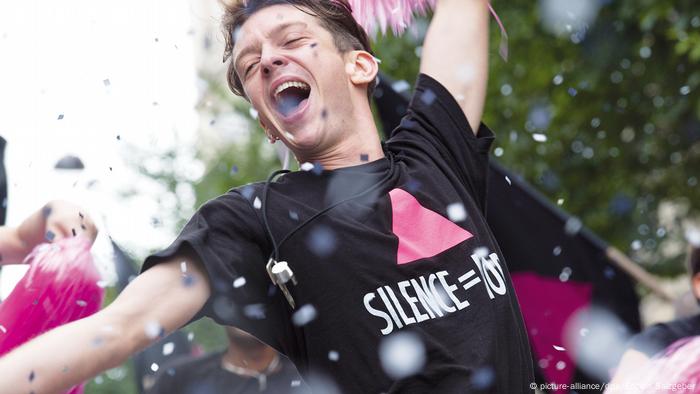
Controversy hands French World Cup berth
In order to support her writing of this book, the University of Brighton awarded her a Sabbatical Award. Chrystie's second strand of research is an intersectional discourse analysis of texts produced by mass shooters, which focuses on how the desire-centred discourse strategies used by the offenders attempt to legitimate structural inequalities and construct normative identities. It discusses the agency of the artists that has been shaped through particular forms of art history writing in posts Turkey. The second area concerns with transnational feminist alliances within the wider Middle Eastern geography since the postwar period.
It addresses the impact of inter-subjective links in the creative milieu of artists on art and visual culture with an emphasis on the effects of the changing political landscape in post-conflict societies. Watch me give a lecture on this topic at the British Institute at Ankara back in September It opens up the discussion on the impact of local and international art worlds on the reproduction of the post-urban public space in the Global South. My research interests align along two related axes, which are my subject specialisms in nineteenth-century British art and culture, and the history of art museums and art collections.
In both trajectories my key concern is how gender and related social formations sexuality, the nation, the modern organize the production and circulation of visual images. A key focus for me is portraiture, which proves a particularly rich seam of material in British and related visual culture, but I have also enjoyed working outside my period specialization in collaborations on feminist-informed projects relating to art exhibitions, collections and museums.
I am an occupational therapist and a Principal Lecturer in Occupational Therapy. I am interested in occupational therapy across a range of mental and physical health topics. I have a specific interest in issues of culture and diversity in health and social care, pain management and Medically Unexplained Symptoms MUS ; a phenomenon of primarily of physical health care. I am interested in qualitative methods of research, particularly IPA.
My research interests include: Human occupation and older people; Lived experiences of older lesbian, gay, bi-sexual and trans people: issues of human occupation, exclusion, isolation health and social care; Working with people who have Medically Unexplained Symptoms; The psychosocial issues of physical illness and trauma; HIV and human occupation. Visual Methods of Research is my area of expertise and the core of the qualitative work I have developed for several research projects, including my PhD, for which I worked with transnational families and looked at how they incorporate photography in everyday routines.
Working with transnational families has allowed me to address media practices in the contexts of migration, kinship and intimacy. A at Ruhr University Bochum. With this background in mind it should be clear that I am deeply fascinated by new and overlapping academic research areas within Photography and Media, as well as innovative practical photographic processes, all of which I hold as necessarily interdisciplinary and collaborative.
The need for interdisciplinary and transdisciplinary research is essential in order to address complex phenomena of our increasingly mediated, everyday world today. Sub-disciplines combining conceptual and methodological approaches emerge and collaborative work between them is not only productive and beneficial but wholly necessary.
Between Sept 15, , and July 31, , gay couples were enrolled HIV viral load measurement before the estimated infection date was more Germany—Olaf Degen, Sindy Bartel, Anja Hüfner (University Medical Centre Walk In Ruhr, Ruhr University Bochum, Bochum); Hans-Jürgen Stellbrink. Because of that and the hard work of gay and HIV activists, the stigma about dating and having sex with positive dudes is certainly lessening.
In the media studies field there is a re turn towards the non-media centric perspective. It is my aim to continue contributing to the development of this line of thought. My research interests are driven strongly by a social justice agenda, along with a desire for research to be collaborative and participatory with demonstrative social impact which ultimately tackles disadvantage and inequalities in health. Areas of specific interest and expertise relate to three key areas:.
Dr Laetitia Zeeman undertook research evolving from mental health practice by means of critical discourse analysis to understand the discursive construction of gender, including the patriarchal discourse in post-apartheid South Africa. This work questioned normative formations of gender and made visible how cultural and social change occurs in the margins, where gender identity, gender expression and the related relational practices of women moved beyond binary formations towards gender plurality.
This research considers how barriers can be overcome by health professionals when providing care for LGBTI people, and how to address the obstacles LGBTI people face when accessing healthcare.
The output informs health service development and delivery for those who lead non-normative lives by acknowledging gender and sexual diversity. The research included developing a training programme for health professionals to address the specific health needs of LGBTI people. This programme has been used widely in healthcare settings to inform medical and nursing curricula, as well as offering training for health professionals.

Further research included a critique of discourses that shape mental health practice with the introduction of innovative roles such as the mental health practitioner role in the UK. This initiative was designed to address workforce shortages in contemporary mental health practice. My work is rooted in the disciplines of Social and Community Psychology, with a transdisciplinary ethos.
During my PhD, I focused on group dynamics in the steering committees of grassroots social movements, namely the Transition Towns movement in Monteveglio Italy. A major research focus of mine is Discursive Psychology. I have applied Discourse Analysis to detect and understand homophobia and heterosexism, and I have analysed its manifestations in different contexts, from religious documents to high school settings. The Centre for Transforming Sexuality and Gender welcomes candidates for doctoral study and will assist with applications for PhD funding.
In the first instance, please investigate your relevant academic disciplines on the university's PhD programme areas. Her research explores what the participatory experiences of transgender including non-binary people are in everyday sport and physical exercise in the UK. Her research draws on trans feminism and queer theory, sociological discussions about the body and embodiment and sports sociology. Her research, which engages directly with transgender including non binary people, asks what barriers people may or may not be facing when accessing sport, and looks to place these stories centrally and make recommendations for greater inclusivity.
My PhD research looks at the queer affects, practices and relations found in rural areas, and is based in both the School of Humanities and the School of Environment and Technology at the University of Brighton. Academic understandings of sexuality often privilege urban centres as places where queer sex flourishes, which builds the assumption that sex must be visible and performed in order to be understood.
My research interests can be categorised into 3 areas, all of which I approach using queer theory:. What can asexual people, communities and experiences teach us about sex, sexuality, desire and gender? Asexual people do not experience sexual attraction to others. Their livelihoods, perspectives and politics can therefore help us to critique systems of social and sexual control, like compulsory heterosexuality for example. I am interested in exploring the relations that people who do not experience sexual attraction have to 'sex' as a social function of power.
I'm also interested in understanding 'nonsexual' ways of being, and uncovering their radical politics. Unlike asexuality, all people engage with nonsexual ways of relating and feeling. What happens when we understand friendship, romance or even loneliness as nonsexualities? The countryside is often seen as a place that lacks queerness, or at least opportunities through which to live queerly.
Even so, many queer people continue to live in rural areas. Department of History University of Auckland. Library University of Chicago.
- most used gay dating app in Samarra Iraq;
- A Golden Age for Queers??
- Sie sind hier;
Oriental Institute University of Cincinnati. Institute of Historical Research University of London.
News Ticker
Royal Holloway University of London. School of Advanced Study University of London. Library University of Miami. Department of History University of New Mexico. Department of Education University of Oxford. Department of International Development University of Oxford. Faculty of Oriental Studies University of Oxford.
Latin American Centre University of Oxford. Mathematical Institute University of Oxford. Digital Humanities Institute University of Sheffield. Centre for Medieval Studies. Faculty of Law University of Virginia. Tu shu guan Zhongguo zhi shi ji chu she shi gong cheng [publisher not identified]. Use of Oxford e-resources Oxford subscribes to a wide range of e-resources, e-journals and e-books to support your research and study.
Remember: E-resources may be used for study and research but NOT for commercial purposes You may NOT share your password or pass content from e-resources to anyone else Systematic downloading or viewing of excessive amounts of data is strictly forbidden Failure to comply may result in: Referral to the University Proctors Publishers withdrawing content from the whole university. The following databases are newly acquired or being evaluated for a future subscription.
African Activist Archive Project This link opens in a new window. This opens a pop-up window to share the URL for this database. The African Activist Archive makes available online the records of activism in the United States to support the struggles of African peoples against colonialism, apartheid, and social injustice from the s through to the s. It contains documents, photographs, posters, badges, audio and video recordings. African American Periodicals, This link opens in a new window. African American Periodicals allows users to search more than African American Periodicals published between and Created by Readex through a partnership with the Wisconsin Historical Society, African American Periodicals enables researchers to explore African American culture, thought and opinion ranging over more than years of African American life.
African Online Digital Library This link opens in a new window.