Jewish gay dating Benin Nigeria
Contents:
There were no reports of criminal or civil cases involving consensual same-sex sexual conduct. Members of the LGBTI community reported instances of discrimination and social stigma based on sexual orientation. Police generally ignored vigilante attacks, and incidents of mob violence occurred, in part due to the perceived failure of local courts to punish criminals adequately. Such cases generally involved mobs killing or severely injuring suspected criminals, particularly thieves caught stealing. Unlike in prior years, the press reported only one case of mob justice during the year.
On August 21, residents of the neighborhood of Sekandji Gbago in the Seme Kpodji Commune burned to death a man accused of stealing a motorcycle. The law provides for the rights of workers, except certain civil servants and public employees, to form and join independent unions with some restrictions. Unions must register with the Ministry of Interior, a three-month process, or risk a fine.
The law does not establish clear grounds on which registration of a trade union may be denied or approved, and official registration may be denied without the union having recourse to a court. The law provides that a trade union federation must be made up of at least five enterprise-level trade unions in the same sector or branch of activity. Additionally, the law requires that a trade union confederation must be composed of at least three trade union federations of different sectors or branches of activities and that only trade union confederations may have affiliation at a national or international level.
In September the secretaries-general of six trade union confederations issued a joint statement condemning the arrest and day confinement of Captain Patrice Trekpo, the acting general secretary of the Water, Forests, and Hunting Union of Benin. Trekpo was arrested after decrying poor management and bad working conditions for personnel in Pendjari National Park in a local television appearance. In December the minister of environment and sustainable development dismissed Trekpo.
On February 20, in response to the appeal, the Constitutional Court declared that the case was outside its jurisdiction.
Homosexuality and Judaism
The law provides for the rights of workers to bargain collectively. A labor inspector, a secretary, and one or two rapporteurs preside over the committee. The minister of labor and civil service has the authority to determine which trade unions may be represented in the negotiation at the enterprise level. The minister has the power to extend the scope of coverage of a collective agreement. The National Permanent Commission for Consultation and Collective Bargaining, and the Social Sector-based Dialogue Committee were active in each ministry to foster dialogue between the government and unions.
On May 11 and September 13 respectively, the commission held two ordinary sessions. In June the government approved two decrees to establish a National Social Dialogue Council and to appoint its members. The law provides for the right to strike, but prior notification must be provided. The merchant marine code grants seafarers the right to organize but not the right to strike. A trade union considering a strike should notify, in writing, the leadership of the concerned entity and the minister of labor and civil service at least three days before the start of the strike.
The notification letter should mention the reasons for the strike; the location, date, and start time of the strike; and the expected duration of the strike. Authorities do not formally grant permission to strike, but strikes that fail to comply with these requirements are deemed illegal.
The law provides that civil servants, public- and private-entity workers, and parastatal employees who provide essential services to maintain minimum services during strikes. Authorities may declare strikes illegal for reasons such as threatening social peace and order and may requisition striking workers to maintain minimum services.
The government may prohibit any strike on the grounds it threatens the economy or the national interest. On September 4, the National Assembly passed Act No Amending and Supplementing Act No of related to the right to strike; in October the president implemented the law. The law restricts the maximum duration of a strike to 10 days per year for all civil servants, local government personnel, public- and private-sector workers, and parastatal employees, except workers who are barred from striking. By law health-sector staff and military and paramilitary personnel—including police, customs, and water, forest and hunting officers—are barred from striking.
Minimum service is required for workers that carry out essential responsibilities such as judges, prison and justice system personnel, and staff of the sectors of energy, water, maritime and air transport, financial administration, and telecommunication, with the exception of private radio and television broadcasters. Another provision provides that strikes motivated by the violation of fundamental rights and universally recognized union rights may not prompt salary deductions.
The law prohibits antiunion discrimination and provides for reinstatement of workers fired for union activity. Employers may not take union membership or activity into account in hiring, work distribution, professional or vocational training, or dismissal. In addition to certain civil servants and public employees, domestic workers, agricultural workers, migrant workers, and those in export processing zones are excluded from relevant legal protections.
Workers discussed labor-related issues with employers through the National Consultation and Collective Bargaining Commission. Information regarding whether or not remedies and penalties had deterrent effects was not available. The government generally respected the right to form and join independent unions and the right to collective bargaining.
With the exception of merchant shipping employees, workers exercised their right to strike. Civil servants went on strike throughout the year. The government did not effectively enforce the law, particularly in the informal sector and with regard to the provisions on antiunion discrimination and reinstatement. There were reports that employers threatened individuals with dismissal for union activity.
Site Information Navigation
No violations related to collective bargaining rights were reported. On January 4, the National Assembly passed legislation abolishing the right to strike for workers in the health, security, and justice sectors. The move triggered a general strike by the National Union of Magistrates, paralyzing the administration of justice. On January 18, the Constitutional Court struck down these provisions stating that the right to strike is a constitutional right that should be protected. The court in its decision urged the National Assembly to regulate the right to strike instead of banning it.
On June 28, the Constitutional Court reversed the previous court ruling on the right to strike for government workers in the defense, justice, security, and health sectors, giving as justification the greater societal good of providing that essential state functions are performed without interruption. The labor code prohibits forced or compulsory labor, with certain exceptions.
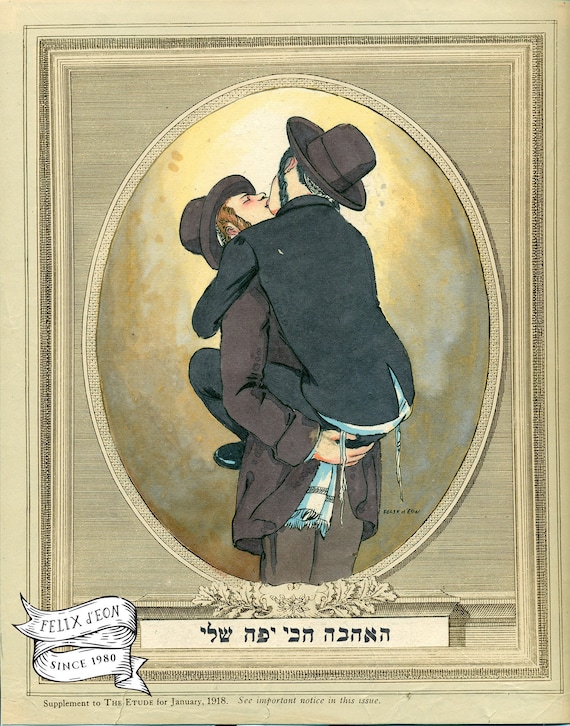
One symbol for being gay is a triangle, and when two triangles like each other a lot, they make a Star of David. That, at least, is the idea behind. Hugo Marcus (–) was a man of many names and many identities. Born a German Jew, he converted to Islam and took the name Hamid, becoming one.
The law allows for imprisonment with compulsory labor. By law authorities may exact work from military conscripts that is not of a purely military character. Laws regulating various acts or activities relating to the exercise of freedom of expression allow imposition of prison sentences involving obligation to perform social rehabilitation work. Penalties for conviction of forced labor were generally sufficient to deter violations. Forced labor occurred, including domestic servitude and bonded labor by children.
Jealous gay lovers in a bloody fight in Benin - Vanguard News
Forced labor was mainly found in the agricultural e. Many traffickers were relatives or acquaintances of their victims, exploiting the traditional system of vidomegon, in which parents allow their children to live with and work for richer relatives, usually in urban areas see section 6. The government has established laws and regulations related to child labor, including its worst forms. The List of Hazardous Occupations sets the minimum age for employment in hazardous work at age The list identifies 21 trades prohibited for children and defines 74 related hazardous activities.
Specific trades noted on the list include mining and quarrying, domestic service, and agriculture. The government did not effectively enforce the law.
- online gay dating in Fresno United States.
- up state Benxi China gay dating sites.
- Israel: Treatment of sexual minorities; state protection and services available.
The labor code prohibits the employment or apprenticeship of children under age 14 in any enterprise; children between ages 12 and 14, however, may perform domestic work and temporary or light seasonal work if it does not interfere with their compulsory schooling. The code bans night work for workers under age 18 unless a special dispensation is granted by the government in consultation with the National Labor Council. Workers under age 18 are entitled to a minimum hour uninterrupted break including the nighttime period.
The Labor Office, under the Ministry of Labor and Civil Service, enforced the labor code only in the formal sector due to a lack of inspectors. The total number of inspections conducted during the year was unavailable. Labor laws were not effectively enforced. The government also worked with a network of NGOs and journalists to educate the population regarding child labor and child trafficking. The ministries of Justice and Labor and Civil Service, supported capacity building for officials and agencies responsible for enforcing child labor laws.
During the year authorities prosecuted perpetrators of child labor violations in connection with child trafficking. In April security forces intercepted two Togolese sisters, ages 17 and 16, at the Benin-Nigeria border; the sisters were on their way to Badagry in Nigeria for domestic servitude.
The man accompanying the two girls claimed he was taking them from Togo to Badagry to live with their older sister, who was his wife.
Homosexuality and Judaism
To help support their families, children of both sexes, including those as young as age seven, worked on family farms, in small businesses, on construction sites in urban areas, in public markets as street vendors, and as domestic servants under the practice of vidomegon. Many rural parents sent their children to cities to live with relatives or family friends to perform domestic chores in return for receiving an education.
Host families did not always honor their part of the vidomegon arrangement, and abuse and forced labor of child domestic servants was a problem.
Children often faced long hours of work, inadequate food, and sexual exploitation; factors indicative of forced labor and exploitation of children in domestic servitude. Up to 95 percent of children in vidomegon were young girls. Several local NGOs led public education and awareness campaigns to decrease the practice.
A majority of children working as apprentices were under the legal age of 14 for apprenticeship, including children working in construction, car and motorbike repair, hairdressing, and dressmaking. Children worked as laborers with adults in quarries, including crushing granite, in many areas. Children were at times forced to hawk goods and beg, and street children engaged in prostitution see section 6.
Children under age 14 worked in either the formal or informal sectors in the following activities: agriculture, hunting and fishing, industry, construction and public works, trade and vending, food and beverages, transportation, and other services, including employment as household staff.
Children are required to attend only six years of primary school, through age Children ages 12 to 13 are particularly vulnerable to the worst forms of child labor, as they may have completed primary school but are under the minimum legal working age of The constitution and labor code prohibit discrimination with respect to employment and occupation based on race, color, sex, religion, political opinion, national origin or citizenship, social origin, and disability.
The laws, however, do not explicitly prohibit discrimination based on sexual orientation, gender identity, and HIV or other communicable disease status. The government, in general, effectively enforced these laws and regulations in most sectors. Women experienced extensive discrimination because of societal attitudes and resistance to behavioral change see section 6. Employment discrimination occurred in the private and public sectors. According to the National Institute of Statistics and Economic Analysis, the employment rate was 73 percent for men and 69 percent for women in The prohibitions on discrimination did not apply to the large informal sector.
The labor code includes provisions to protect the employment rights of workers with disabilities, but many experienced discrimination in hiring and access to the worksite. The government set minimum wage scales for a number of occupations. The labor code establishes a workweek of between 40 to 60 hours, depending on the type of work, and provides for at least one hour rest period per week. Domestic and agricultural workers frequently worked 70 hours or more per week, above the maximum of 12 hours per day or 60 hours per week provided for by the labor code.
The labor code also mandates premium pay for overtime and prohibits excessive compulsory overtime.
The law establishes occupational safety and health standards OSH. The government has the authority to require employers to remedy dangerous work conditions but did not effectively do so.